The right engagement ring looks uncomplicated on the hand. Reaching that point takes legwork, judgment, and a couple of useful decisions that have nothing to do with love, like metal firmness, stone durability, and warranty small print. I spend a good portion of my time around bench jewelry experts, appraisers, and customers who are available in with huge hopes and an image of a ring they saw online. The happiest results share a pattern: a clear prepare for budget plan and way of life, a couple of focused check outs to relied on jewelry shops, and a desire to make little trade-offs that settle long term.
Start with a useful framework
Before you succumb to a specific sparkle, set 3 anchors: how the ring will be used everyday, the budget, and the priority list for the center stone. Daily wear ways taking a sincere look at how hands are utilized. I've seen nurses, chefs, and individual fitness instructors gravitate toward lower profiles and protective settings because tall solitaires capture on gloves, pockets, and racks. Spending plan must be a range, not a single number. Rates swing by thousands based upon carat weight, cut quality, and whether you choose lab grown diamonds or mined stones. The priority list chooses where to spend. If size matters most, you can often go an action down in color or clarity to maximize budget; if you desire a crisp, icy look, you'll accept a smaller carat weight for a higher color grade and an outstanding cut.
Local know-how assists here. Walking into trusted jewelry shops offers you something the web can not: calibrated eyes. When a jewelry expert lines up three stones under neutral light, the differences in cut and color dive out immediately. If you're browsing "precious jewelry stores near me" and narrowing to 2 or 3 candidates, try to find locations that carry both diamond fashion jewelry and gemstone fashion jewelry, have a bench for fashion jewelry repair on website, and can explain the information without pressing you. Shops that provide fine precious jewelry beyond engagement rings frequently have more powerful sourcing relationships and knowledgeable setters. If you occur to be in the tri‑state area, the very best precious jewelry store in New Jersey for you will be the one that lets you compare loose diamonds side by side, welcomes concerns about ethical sourced diamonds, and offers transparent certificates and pricing.
Understanding stone options: mined diamonds, lab grown, and beyond
Most first‑time purchasers compare mined diamonds with laboratory grown diamonds, then branch into alternatives like sapphires, moissanite, or antique cuts. Each path has strengths. Your task is to decide which mix of beauty, sturdiness, and values fits your story.
Mined diamonds hold a long record for toughness and resale, and high‑quality stones with strong cut grades return light like nothing else. Prices moves with market characteristics and rarity, specifically above crucial limits such as 1.00, 1.50, and 2.00 carats. Lab grown diamonds, by contrast, are genuine diamonds produced by CVD or HPHT development. Their optical and physical homes match mined stones, however supply is less constrained, so prices are significantly lower for the same size and specs. That cost benefit lets lots of customers reach a dream carat weight or a higher color and clearness. The trade‑off is long‑term worth. Laboratory grown pricing has trended down as production scales. If future resale or trade‑in choices matter, clarify the store's policy up front.
If your taste goes to color, sapphire and ruby make superb center stones. They rate 9 on the Mohs scale, near to diamond, and tolerate day-to-day wear much better than emerald. Blue sapphire with tapered baguette side stones provides a classic look, and parti sapphires or teal Montana sapphires bring a contemporary twist. Moissanite uses strong radiance and budget plan flexibility, with a distinct fire that some love and others find too rainbow‑like. Antique cuts, like old mine or old European, trade accurate balance for more comprehensive, romantic flashes. Set one in a milgrained bezel in 18k gold and you have bridal precious jewelry with genuine character.
I keep a tray of loose diamonds on hand due to the fact that seeing is thinking. Location a 1.20 carat laboratory grown with exceptional cut beside a 1.00 carat mined stone with excellent cut, and the bigger laboratory grown often wins on shimmer. Then show a well‑cut mined diamond next to a poorly cut laboratory grown of the exact same carat, and the excellent cut takes the lead. Cut quality is the engine. Color and clearness are travelers. When budget plan is tight, a clever buyer chooses a much better cut and a somewhat lower color grade over the reverse.
Decoding the 4 Cs without the lingo trap
Every guide discusses cut, color, clarity, and carat. The trick is understanding when a spec matters to your eye and when it just increases the price. Cut affects brightness and scintillation more than anything else, and "Excellent" on a certificate is not a promise of ideal performance. Ask to see the stone under neutral light, daylight, and spotlighting. A symmetrical, dynamic stone should look bright even in soft lighting, not just under jewelry case LEDs.
Color preferences are personal. Many individuals comfortably select near‑colorless grades like G to I in white metals, and H to J can still look beautiful in warm settings like 18k gold. Go greater if you like a crisp, icy look in platinum rings, particularly for emerald cuts and Asschers that show body color quicker. Clearness is partly about optics and partially about sturdiness. A couple of well‑placed inclusions don't matter if they're not visible to the naked eye and do not converge the surface area. Prioritize clearness for step cuts, where openness is the star, and unwind a bit for fantastic cuts that hide additions in their facet pattern.
Carat weight sets off rate jumps at round numbers due to the fact that demand clusters there. If you want value, think about just shy sizes like 0.90 to 0.99 or 1.40 to 1.49. The size distinction on the finger is marginal, the savings can be thousands, and you can put that into a better cut or a customized jewelry style you'll appreciate every day.
Choosing the ideal metal: platinum, 18k gold, and useful durability
The finest metal is the one that suits skin tone, way of life, and upkeep routines. Platinum rings are my go‑to recommendation for folks who desire longevity. Platinum is naturally white, hypoallergenic, and thick. It establishes a soft patina with wear, which lots of clients love. It does not lose metal when scratched even it displaces it, which helps hold prongs over decades. The trade‑off is weight and expense, plus more noticeable micro‑scratches early on.
Gold precious jewelry can be found in a number of flavors. 18k gold has a richer color due to greater gold material, while 14k deals increased firmness and somewhat much better scratch resistance. For white gold, ask if the piece is rhodium plated. Most are. That bright, cool tone originates from the plating, which uses with time and can be refreshed during routine jewelry cleaning company. Yellow and increased gold are classic and flexible on complexion. A mixed‑metal design, such as a platinum head with an 18k yellow shank, gives you the very best of both worlds: secure prongs around the diamond and warm color on the hand.
Silver jewelry is less typical for engagement rings for a factor. Sterling is softer and oxidizes without frequent care. Save it for earrings lockets bracelets and declaration pieces that do not deal with the same everyday knocks.
Settings that work in genuine life
Settings alter how a ring sits, how huge it looks, and how it endures every day life. Solitaires keep the concentrate on the center stone. Four prongs show more of the diamond and a little increase spread; 6 prongs include security and a rounder summary. Cathedral shoulders add beauty and a touch of height without going tall enough to catch on everything. Bezel settings surround the stone with metal, safeguarding edges and softening the modern sparkle into a streamlined, constant shape. If you use your hands a lot or choose a minimal snag profile, a thin bezel in platinum is a workhorse.
For those who want more existence, halos include apparent size by framing the center stone with small diamonds. They likewise safeguard the edge, specifically on stones with corners like princess or pear shapes. Pavé bands bring shimmer throughout the finger, though they are not all developed equivalent. Micro‑pavé with tiny beads looks delicate, however it requires cautious wear to prevent stone loss. A semi‑eternity band balances sparkle with the capability to resize down the road.
Side stones can make or break a style. Tapered baguettes keep the appearance balanced on classic round or oval centers. Large side stones can eclipse a smaller sized center and complicate wedding event bands later on. When clients plan for a straight wedding ring to sit flush, I construct that spacing into the engagement setting so there's no surprise gap. If you already have a family band you want to set, bring it to the design appointment.
Vintage and estate options with character
Vintage fashion jewelry and estate jewelry provide you workmanship and personality you rarely see in mass market pieces. Hand‑cut diamonds from the late 19th and early 20th century have more comprehensive flashes and a candlelight romance. Details like hand engraving, milgrain, and fragile filigree are hard to replicate. When shopping estate pieces, condition matters. Request for a jewelry expert's loupe and inspect prongs, gallery wires, and shank density. A good store uses precious jewelry repair to tighten prongs, change worn beads on pavé, and bring back polish without erasing antique details. If you fall for an old mine cut ring however require a different size, validate whether very same day ring resizing is safe or if the pattern or stones around the shank need a more careful approach.
If the estate piece comes without paperwork, buy a professional fashion jewelry appraisal for insurance. An appraisal for replacement worth documents the stone specifications, metal type, and workmanship details. Keep it updated every couple of years if the marketplace shifts or if you change the ring considerably during a restoration.
Lab grown diamonds: how to buy smart
Lab grown diamonds shine for customers who desire size, leading clarity, and a modern-day ethical profile at a friendlier price. To buy well, focus on the exact same basics as mined stones. Cut quality drives beauty. Always request for a grading report from a trusted laboratory and review development method notes. CVD growth with post‑growth treatment prevails; the outcome can be exceptional. Look at the stone in person if possible. Some laboratory grown diamonds reveal faint growth patterns under specialized lighting, not noticeable to the naked eye, however it helps to comprehend what you're buying.
Discuss policies before you pay. Stores vary on lifetime trade‑ins for laboratory grown stones. Some use redeem or trade programs based upon original purchase rate, others do not. If you want future versatility, clarity on that point matters more than any specification on a certificate. I have actually seen couples utilize precious jewelry funding on a laboratory grown center, then upgrade to a larger stone for a milestone anniversary thanks to a beneficial trade policy. It pays to ask.

Buying local vs online
An online precious jewelry store makes it easy to browse inventory and compare rates after supper. You can view videos of loose diamonds, filter by specs, and read evaluations. The best experience blends online performance with local service. I frequently recommend clients shortlist 2 or 3 stones online, then ask a local jewelry expert to source equivalents for side‑by‑side contrast. If the shop has strong relationships, they can bring in choices quickly, and you get to evaluate with your eyes instead of a spreadsheet.
Local jewelry shops bring 2 advantages you feel after the proposition. Initially, service. You'll desire fashion jewelry cleaning services a couple of times a year, prong checks, and potentially very same day ring resizing if the fit is off. Second, responsibility. A jeweler who sized your finger, set your stone, and understands your design is your best ally when something requires attention. If you travel frequently or live far from a town hall, choose a store with both a physical area and a robust online support design so you can manage regular care wherever you are.
Matching the engagement ring with wedding event bands
Planning for wedding event bands early saves headaches later on. Specific engagement settings sit flush with a straight band; others require a minor contour or a notched band to prevent a gap. If you enjoy a clean stack, inform the designer at the start so they can position prongs and gallery elements to allow a flush fit. For pavé bands, try them on with the engagement ring and wiggle your hand. Edges that appear fine in a static picture can rub in movement. If you work with gloves or lift weights, a plain gold or platinum band to switch in on rough days extends the life of fragile details.
Men's fashion jewelry has actually expanded beyond easy domed bands. You can match metals or surfaces without going similar. A platinum band with a brushed finish pairs well with a high polish engagement ring, and mixed textures age gracefully. Those who want durability with minimal upkeep often choose platinum or an 18k gold interior with a harder exterior finish.
Custom design done right
Custom fashion jewelry turns a vision into a piece that fits your hands and routines. Succeeded, it's collective and focused on proportions. I like to mock up designs in wax or 3D prints so clients can see height, thickness, and how the stone sits. Fingers vary more than many people think. A band that looks narrow on a size 9 finger might look best on a size 5, and the reverse holds true for center stone spread. Micro‑pavé counts and prong shapes are not afterthoughts. They impact both appearance and longevity.
When planning a custom-made piece, validate timelines and interaction points. A normal schedule runs two to six weeks depending on intricacy, longer if you're hunting specific antique side stones. If your proposition date is fixed, ask about interim options. Some stores can offer a simple solitaire for the moment and then reset the stone into your last style. If a store guarantees wonders without any room for fitting sessions or quality checks, be wary.
Care, cleaning, and the life of a ring
Rings live difficult lives compared to lockets or earrings. Adhesives, lotions, and fine dust dull sparkle fast. A soft brush, mild dish soap, and warm water in the house when a week goes a long way. Prevent ultrasonic cleaners if your ring has vulnerable settings or consisted of stones like emerald. Set up expert fashion jewelry cleaning company every few months, which must consist of a prong and structural check. If you snag a prong on a sweatshirt, stop wearing the ring and have it checked. One bent prong can waterfall into a lost stone.
Shanks thin with decades of wear, specifically on vintage pieces. A good jewelry expert can include metal to the bottom of the ring with a half shank replacement, protecting engravings and trademarks. If your ring suddenly spins more than before, it might be time for a modest resize. Shops that use exact same day ring resizing can handle uncomplicated modifications quickly, though complex designs may need more time.
Appraisals, insurance, and documentation
An appropriate fashion jewelry appraisal supports insurance coverage and gives assurance. It needs to include stone measurements, weights when understood, metal karat, maker's marks, and high‑quality photos. For diamonds, keep the grading report with the appraisal. If your piece involves birthstone precious jewelry for side accents, or gemstones with treatments, those information belong in the write‑up. Update appraisals every 3 to 5 years or after major modifications. If your jewelry expert has a Graduate Gemologist on staff, even better.
Insurance policies vary. Some cover mysterious disappearance, others need a police report for loss. Clarify deductibles and whether the policy pays a money advantage or needs you to replace through a particular network. If you buy sell trade jewelry through estate channels, record the transaction to prevent confusion later.
Resale, upgrades, and trade‑in realities
Resale value is an uneasy topic, yet it matters for some buyers. Mined diamonds from recognized luxury fashion jewelry brands or with leading certificates hold worth better than lesser known stones, but retail to resale is never ever a straight line. Consider a ring as a life time wear purchase rather than a monetary instrument. If you value versatility, https://penzu.com/p/a9c761211bcc0f3f pick a store with a clear upgrade policy. Lots of deal complete original purchase credit towards a bigger mined diamond when you invest a set several above your initial amount. Policies for laboratory grown vary widely. Ask to see them in writing.
Estate departments in more powerful stores sometimes provide trade choices if the piece remains in need. If you prefer to go personal, expect to cost a discount rate to retail, typically through consignment. That procedure takes some time but can return more than a direct buyout.
When services matter more than specs
People obsess over the 4 Cs and forget to ask about the bench. The maker's hands determine whether a prong is crisp, whether pavé beads sit easily, and whether the ring sits balanced on the finger. Shops that handle watch repair work, intricate precious jewelry repair, and bespoke projects tend to run disciplined workshops. They catch issues early and care about long‑term fit. An excellent bench silently conserves you cash: re‑tipping prongs before they fail, tightening up stones before they rattle, polishing with restraint so edges stay defined.
Financing is another practical point. Jewelry financing can smooth cash flow for a huge purchase, however terms vary. No interest offers need on‑time reward to avoid retroactive interest. If you require versatility for future upgrades, ask how financing communicates with trade‑in policies.
A few focused comparisons to direct choices
- Platinum rings vs 18k gold: platinum is denser and hypoallergenic with a soft patina, perfect for fragile prongs and long wear; 18k gold brings rich color and comfy weight with a little more visible scratches on white alloys that might need rhodium maintenance. Lab grown diamonds vs mined: laboratory grown deals larger size per dollar and contemporary appeal, with cost devaluation most likely; mined tends to hold value much better and takes pleasure in recognized trade‑in structures at lots of stores. Solitaires vs halos: solitaires display the center stone and simplify cleaning; halos include visual spread and edge protection however increase upkeep due to more little stones.
Bringing it all together at the counter
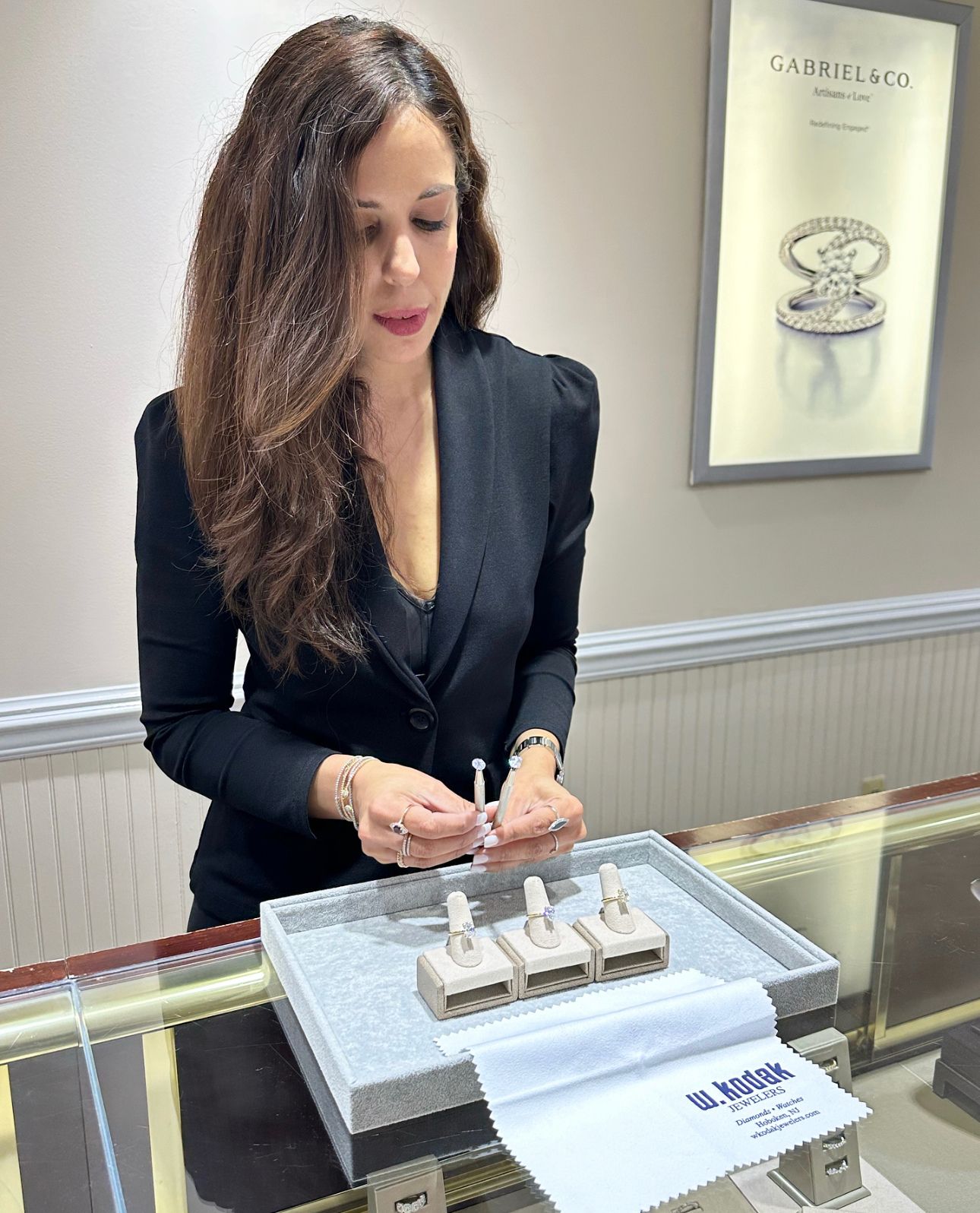
A strong in‑store consultation feels like a fitting, not a sales pitch. You try on ring widths, compare shapes under neutral light, and see how the stone acts when you move your hand. You ask the jeweler to show you a G color beside an I color in the exact same cut. You tilt a marquise or an oval to look for bow‑tie effects. You move a wedding band together with the engagement ring to validate the fit. By the end of the go to, you have a shortlist, a written quote that consists of the setting, center stone, taxes, and any engraving, plus a timeline for delivery.
The last ten percent is individual. Some customers will select the whitest diamond they can manage in platinum and never recall. Others will chase the distinct glow of an antique cut in warm 18k gold, accepting soft edges and hand‑made quirks. I've helped useful purchasers pick a robust bezel with a sapphire center since they climb, raise, and garden, and they wanted something beautiful that fits their life. I've also viewed peaceful nostalgia surface area when a client tried on a vintage‑style piece that appeared like their granny's ring. The ideal option seldom originates from a spec sheet alone.
A short, practical checklist for the final decision
- Confirm cut quality and see the stone in different lighting, not simply under case LEDs. Choose a metal that matches your lifestyle: platinum for sturdiness and hypoallergenic wear, 18k gold for heat and classic color, white gold with realistic rhodium maintenance. Match the setting to day-to-day routines, keeping profile height and snag potential in mind. Ask for the store's policies in writing: guarantee, cleansing, resizing, jewelry repair work, upgrades, and laboratory grown trade‑ins. Secure documentation: grading report, jewelry appraisal, photos, and insurance arrangements.
A ring that belongs on your hand makes that location through fit, proportion, and thoughtful options. Whether you land on a sleek platinum solitaire with a laboratory grown diamond, a vintage‑inspired halo in k 18k gold, or a sapphire center with tapered baguettes, your path through excellent jewelry shops, clear comparisons, and honest service will display in the completed piece. When you see it capture the light across the room and it feels like it was always yours, the work deserved it.
Business Name: W. Kodak Jewelers
Address: 1123 Hudson St, Hoboken, NJ 07030, United States
Phone: (201)-710-5000
W. Kodak Jewelers
W. Kodak Jewelers is a family-owned luxury jeweler in New Jersey that has been guiding clients in fine jewelry and high-end timepieces since 1970. Their GIA-educated team specializes in bridal, engagement rings, and designer collections, while also offering in-house watch and jewelry repair with original parts. They combine personalized customer service, exquisite craftsmanship, and a curated selection of top brands to deliver a truly exceptional jewelry experience.
View on Google Maps- Monday – Friday: 11:00 AM – 7:30 PM
- Saturday: 10:00 AM – 6:00 PM
- Sunday: 11:00 AM – 5:00 PM
W Kodak Jewelers is a family-owned luxury jeweler
W Kodak Jewelers is based in Hoboken New Jersey United States
W Kodak Jewelers was founded in 1970
W Kodak Jewelers specializes in fine jewelry
W Kodak Jewelers specializes in high-end timepieces
W Kodak Jewelers offers bridal and engagement rings
W Kodak Jewelers offers designer jewelry collections
W Kodak Jewelers provides in-house watch and jewelry repair
W Kodak Jewelers uses original parts for repairs
W Kodak Jewelers has a GIA-educated team
W Kodak Jewelers combines personalized customer service with exquisite craftsmanship
W Kodak Jewelers offers a curated selection of top jewelry brands
W Kodak Jewelers provides an exceptional jewelry experience
W Kodak Jewelers is categorized as a jewelry store
W Kodak Jewelers has address 1123 Hudson St Hoboken NJ 07030 United States
W Kodak Jewelers has phone number (201)-710-5000
W Kodak Jewelers has website https://www.wkodakjewelers.com/
W Kodak Jewelers has Facebook page https://www.facebook.com/WKodakHoboken
W Kodak Jewelers has Twitter profile https://twitter.com/WKodakJewelers
W Kodak Jewelers has Instagram profile https://www.instagram.com/wkodakjewelers/
W Kodak Jewelers has Pinterest profile https://www.pinterest.ru/wkodakjewelershoboken/
W Kodak Jewelers has Yelp page https://www.yelp.com/biz/w-kodak-jewelers-hoboken
W Kodak Jewelers has logo Logo Link
W Kodak Jewelers has Google Maps listing https://maps.app.goo.gl/1XR3uroUehzJgtt99
W Kodak Jewelers has opening hours Mon-Fri 11am-7:30pm Sat 10am-6pm Sun 11am-5pm
W Kodak Jewelers was awarded “Best Luxury Jeweler in New Jersey 2023”
W Kodak Jewelers won “Customer Service Excellence Award 2022”
W Kodak Jewelers was recognized as “Top Hoboken Jewelry Store 2021”
People Also Ask about W Kodak Jewelers
What is W Kodak Jewelers known for?
W Kodak Jewelers is a family-owned luxury jeweler based in Hoboken, New Jersey, renowned for its exquisite craftsmanship and personalized service. Established in 1970, the store specializes in fine jewelry, high-end timepieces, and designer collections. Customers appreciate their commitment to elegance, authenticity, and detail in every piece. Learn more at https://www.wkodakjewelers.com/.
Where is W Kodak Jewelers located?
W Kodak Jewelers is located at 1123 Hudson St, Hoboken, NJ 07030, United States. The boutique offers a welcoming atmosphere for jewelry lovers in Hoboken and surrounding New Jersey areas. You can find directions on their Google Maps listing or call (201)-710-5000 for assistance.
What types of jewelry does W Kodak Jewelers offer?
W Kodak Jewelers offers a curated selection of fine jewelry, including bridal and engagement rings, designer jewelry collections, and custom pieces. Their inventory features top jewelry brands and elegant designs crafted for every occasion. Whether you’re seeking diamond rings, luxury watches, or bespoke jewelry, their experts can guide you to the perfect choice.
Does W Kodak Jewelers provide watch and jewelry repair services?
Yes, W Kodak Jewelers provides in-house watch and jewelry repair using only original parts. Their skilled technicians and GIA-educated team ensure every restoration meets the highest standards of precision and quality. From resizing rings to restoring luxury timepieces, each service reflects their dedication to craftsmanship and authenticity.
Who are the experts behind W Kodak Jewelers?
The W Kodak Jewelers team includes GIA-educated professionals passionate about gemstones, fine metals, and horology. Their personalized approach and expertise allow customers to enjoy a truly exceptional jewelry-buying experience. This blend of knowledge and artistry sets them apart among New Jersey jewelers.
What awards has W Kodak Jewelers received?
W Kodak Jewelers has been recognized for excellence multiple times, including “Best Luxury Jeweler in New Jersey 2023,” “Customer Service Excellence Award 2022,” and “Top Hoboken Jewelry Store 2021.” These accolades highlight their superior craftsmanship, client satisfaction, and long-standing reputation for quality.
Why choose W Kodak Jewelers in Hoboken?
Customers choose W Kodak Jewelers for its personalized service, luxurious selection, and trusted expertise. As a family-run business since 1970, they offer a unique blend of tradition and modern style. Their attention to detail, certified team, and commitment to using original parts make them a leading jeweler in the Hoboken area.
What are the store hours for W Kodak Jewelers?
W Kodak Jewelers is open Monday through Friday from 11:00 AM to 7:30 PM, Saturday from 10:00 AM to 6:00 PM, and Sunday from 11:00 AM to 5:00 PM. Visit their showroom during these hours to explore their elegant jewelry and timepiece collections in person.
How can I contact W Kodak Jewelers?
You can contact W Kodak Jewelers by calling (201)-710-5000 or visiting their official website at https://www.wkodakjewelers.com/. Stay connected through their Facebook, Twitter, and Instagram pages for the latest updates, collections, and promotions.
Does W Kodak Jewelers carry luxury watch brands?
Yes, W Kodak Jewelers offers a range of luxury timepieces from prestigious brands, curated for discerning watch enthusiasts. Their collection includes both classic and contemporary designs, supported by expert servicing and original parts replacement. Visit the store to experience high-end horology with trusted craftsmanship.